
History of Jews
in Moldova
From medieval settlements to modern revival — a journey through centuries of resilience, culture and memory.
The history of the Jewish community of Moldova spans more than six centuries. From the earliest documented evidence of Jewish presence in the Principality of Moldavia to the vibrant, renewing community of today. This page traces the unbroken thread of history, culture, struggle and renewal.
A Journey Through Time
The history of Jewish presence in Moldova — from the earliest medieval settlements to the community of today.
The earliest reliable records of Jews on the territory of the country are connected with the Principality of Moldavia in the 14th–15th centuries. Moldavian rulers guaranteed them the right to "permanent settlement" and free trade.
Read more
In the 16th century, the position of Jews in the Principality of Moldavia deteriorated sharply, and in 1579 the expulsion of Jews from the Principality of Moldavia took place. In 1612, Jews again received the right to settle within the Moldavian state.
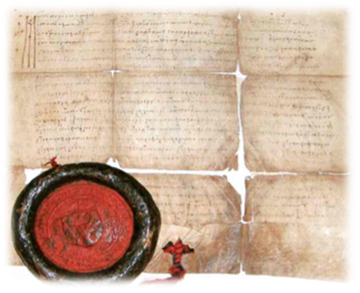
The ruler Vasile Lupu (1634–1653) confirmed the official status of the Jewish community. Moldavian rulers issued Jews chrysobulls (golden bulls).
The personal physician of the ruler Stephen the Great was, from 1467, a Sephardic Jew.
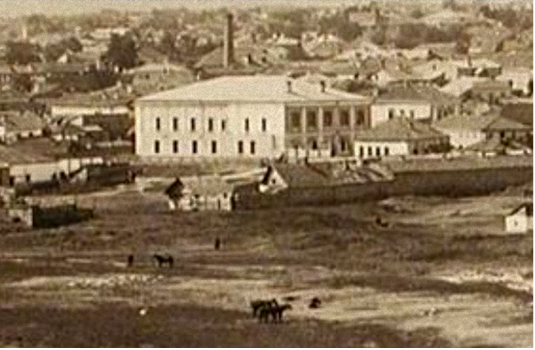
At the beginning of the 18th century, Dimitrie Cantemir recorded the existence of a large Jewish community in his book "Description of Moldavia." By the middle of this century, Jews lived in many Moldavian towns, including Soroca, Bălți and Orhei.
Read more
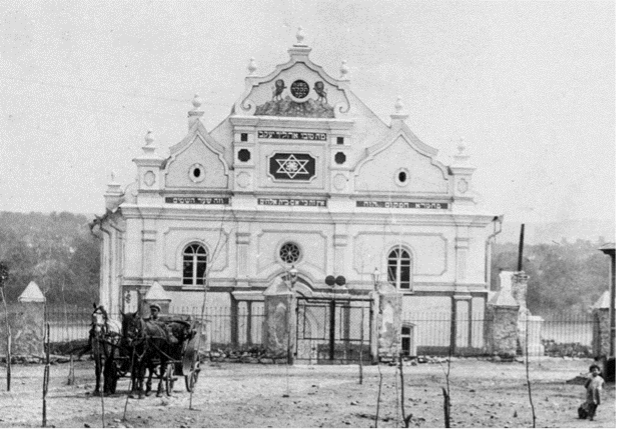
Jews are mentioned as one of the principal communities in Chișinău in a charter of Grigore Ghica from 1739. By the end of the first quarter of the 18th century, the Great Synagogue already existed in Chișinău and served as the main sacred Jewish center of the city until 1940.
The Jewish population also lived in the eastern and southern districts of the Principality of Moldavia, which were under the direct rule of the Ottoman Empire. In Căușeni — the winter capital of the Crimean khans — foreign travelers mentioned the Jewish population in this town.
Rașcov became a center for the development of Hasidism in the 18th century. A large stone synagogue has survived in a ruined state. In the old Jewish cemetery in Rașcov, the grave of Rabbi Shabtai has been identified — one of the most prominent disciples of the founder of Hasidism, Rabbi Baal Shem Tov.
Key Centers
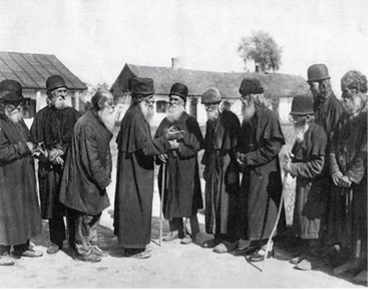
In 1812, Bessarabia became part of the Russian Empire, and Bessarabian Jews found themselves within the Pale of Settlement. By 1897, the 228,000 Jews represented 11.8% of the total population of Bessarabia — third in number in the province.
Read more
Russian legislation on Jews was not initially applied in full, since Bessarabia had autonomous status. But in 1835, Russian legislation on Jews began to be fully applied to Bessarabian Jews as well.
According to the "Charter of the Formation of the Bessarabian Region" of 1818 under Emperor Alexander I, Jews constituted the last — ninth — category of the population and were divided into the estates of townspeople, merchants and farmers. They were forbidden to "enter state service, both military and civil."
Until 1844, the Jewish population of Bessarabia was administered by the Russian administration through kahals — elected representative bodies that exercised administrative and judicial functions over local communities.
The Jewish population was concentrated in towns. In Chișinău in 1897, Jews numbered over 50,000 (46.3% of the total population); in the towns of Orhei, Bălți and Soroca, Jews constituted more than half the population (around 60–65%), while in some small towns — shtetls — the Jewish population reached 80–90% of the total population.
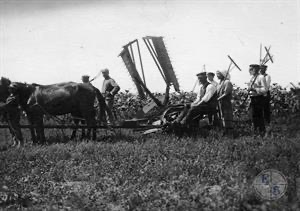
Jewish settlers established 17 agricultural colonies, in which by the mid-19th century lived around 13–16% of Bessarabian Jews. The colonies particularly developed tobacco growing, horticulture, viticulture and winemaking. In 1862, Jews first received the right to purchase landowners' land, but already in 1882 land purchases were suspended, and from 1903 Jews were deprived of the right to purchase land anywhere.
The capitalist modernization of Bessarabia in the last third of the 19th century led to the growth of Jewish capital. For example, in 1898, out of 38 industrial enterprises in Chișinău, 29 belonged to Jews; out of seven steam mills, six were Jewish-owned; out of five printing houses in Chișinău, four belonged to Jews.
In 1910, Dr. Lazar Tumarchin opened the first X-ray office in Chișinău. Anna Tumarchina became the first woman to earn a doctorate in philosophy in Europe.
✦ Historical Note
In 1825 and 1839, Jews were expelled from the 50-verst strip along the state border. Decrees expelling Jews were issued in 1869, 1879, 1886 and 1891. After the "May Laws" of 1882, Jews were expelled en masse from rural areas.
Jewish Population of Bessarabia
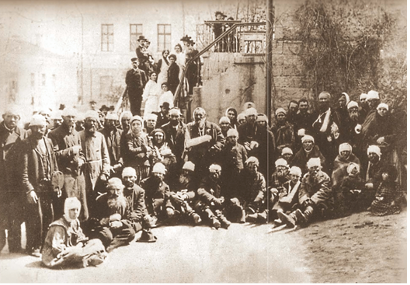
The Chișinău Pogrom of 6–7 April 1903 gained dramatic worldwide notoriety. In February 1903, the teenager Mikhail Rybachenko was killed in Dubăsari. The newspaper "Bessarabets," led by the nationalist Pavel Krushevan, accused Jews of ritual murder.
Read more
On April 6, a pogrom broke out against Jewish homes in Chuflinskaya Square and other parts of Chișinău. The complete inaction of the authorities led to an explosion of violence on April 7. Crowds of pogromists looted homes, beat, killed and raped.
The Jewish hospital led by physician M. Slutchin became a refuge. On the evening of April 7, troops and police began to disperse the rioters. Around 800 people were detained, but only a few were subsequently convicted.
The toll of the pogrom: 49 Jews killed, around 600 wounded, one third of the city's homes (around 1,350) destroyed.
The Chișinău Pogrom of 1903 had enormous consequences: it amplified the emigration of Jews from Bessarabia to Europe, North and South America; it greatly activated the Zionist movement; Jews began organizing self-defense units in many places within the Pale of Settlement.
✦ International Consequences
The Chișinău Pogrom of 1903 struck back at the Russian authorities like a boomerang: the leading banks of the United States, France and other countries refused loans to Russia and granted them to Japan instead, which had dramatic consequences for Russia during the Russo-Japanese War of 1904–1905. The war was lost.
"The Chișinău Pogrom of 1903 became a symbol of antisemitism in the Russian Empire, which soon vanished into the past."
On 27 March 1918, the parliament of the recently created Moldavian Democratic Republic "Sfatul Țării" voted for union with Romania. Among the members of "Sfatul Țării" were 9 Bessarabian Jews representing the interests of major merchants, financiers and bankers.
Read more
In the very first years of Romanian rule, Jewish public, political and cultural life in Bessarabia became noticeably more vibrant. The Zionist movement flourished greatly. In 1935, 40 Jewish communities united to form the Union of Jewish Communities of Bessarabia.
Yehuda Leib Tzirelson — Chief Rabbi of Chișinău from 1908 to 1941 — was the organizer of the founding congress of the Agudas Yisroel ("Alliance of Israel") movement, established in 1912.
A developed network of Jewish primary and secondary schools with instruction in Yiddish and Hebrew was created in Bessarabia. However, by the end of 1922, government policy changed and many of these schools were converted to Romanian ones.
In 1918, Jews automatically received Romanian citizenship. However, as a result of the naturalization law of 1924, many Jews of Bessarabia were defined as people to whom the rights of Romanian citizenship did not apply. Laws and decrees issued in the late 1930s led to the ethnic purges of 1939, when more than half of the Jewish population of Bessarabia was stripped of Romanian citizenship.
The all-Romanian census of 1930 registered around 206,000 Jews in Bessarabia (7.2% of the total population). In terms of the share of agriculture in the occupations of the Jewish population, Bessarabia ranked second after Palestine.
1940
Soviet Occupation
During the period of the ultimatum issued by the USSR to Romania in June 1940, many wealthy Jewish families, as well as politicians, journalists and others, crossed into the territory of Romania, fearing the nationalization of property and reprisals from Soviet power. Immediately after Soviet power was established, Jewish religious, political and public institutions were closed, Zionist activity was banned. Synagogue buildings and Jewish organization premises were nationalized. The number of Bessarabian Jews affected by Stalinist repression in 1940–1941 ranges, according to various sources, from 2,395 to 8,000 people.
1941–1944
The Holocaust
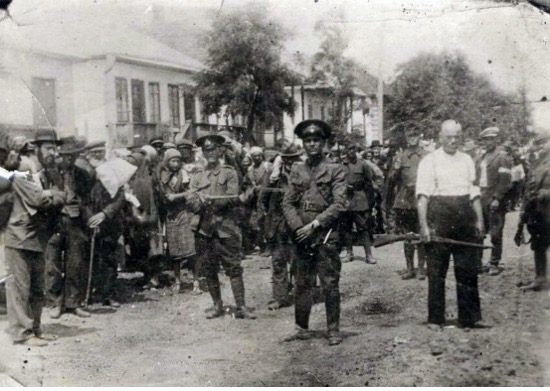
Long before the invasion of June 1941, the Romanian authorities were pursuing a policy of "cleansing the Romanian nation" of Jews. With the outbreak of war, mass killings of Jews took place in every locality of Moldova entered by German and Romanian troops.
Detailed account
The extermination of Jews on the ground was carried out on the German side by SS units — the Einsatzkommandos of Einsatzgruppe "D" — and on the Romanian side by gendarmerie units.
One of the first ghettos established on Bessarabian territory was the Chișinău Ghetto, created on 26 July 1941, which held at least 11,500 prisoners. According to the Romanian administration's own data, an average of 15–20 Jews died daily of hunger and disease in the Chișinău Ghetto, and 2,000 ghetto prisoners were executed in August alone.
Major collection camps for Jews existed at Edineț (11,762 people), near Bălți (the Reutzel camp, 3,253 people), Soroca — Cosăuți (6,000), Vertujeni (22,969), Marculeștii (11,000) and other locations.
In the district center of Dubăsari alone, where Jews were gathered from both banks of the Dniester, SS men from Einsatzgruppe 12, with the assistance of Romanian gendarmes, exterminated 18,000 Jews in September 1941.
Crossings of the Dniester were carried out at five locations: Atachi, Cosăuți, Rezina, Bender and Olonești. Only one third of the Bessarabian Jews transferred to the camps and ghettos of Transnistria survived. After the retreat of Romanian-German troops from Bessarabia in 1944, the number of survivors across its entire territory was fewer than one thousand people.
According to the findings of the International Commission on the Holocaust in Romania, chaired by Elie Wiesel, the total number of Jews who perished in the territory under Romanian administration — mainly in Bessarabia and Transnistria — is estimated at between 280,000 and 380,000 people.
A distinctive feature of the Holocaust in Moldova was that the extermination of Jews proceeded far more rapidly than in regions under German authority alone. By the end of 1941, the Romanian authorities had fully resolved the "Jewish question" on Bessarabian territory.
Righteous Among the Nations
The history of the Holocaust in Moldova records 79 Righteous Among the Nations who saved the lives of Jews at the risk of their own. Sadly, there were also many examples of local participation in the looting and killing of Jews.
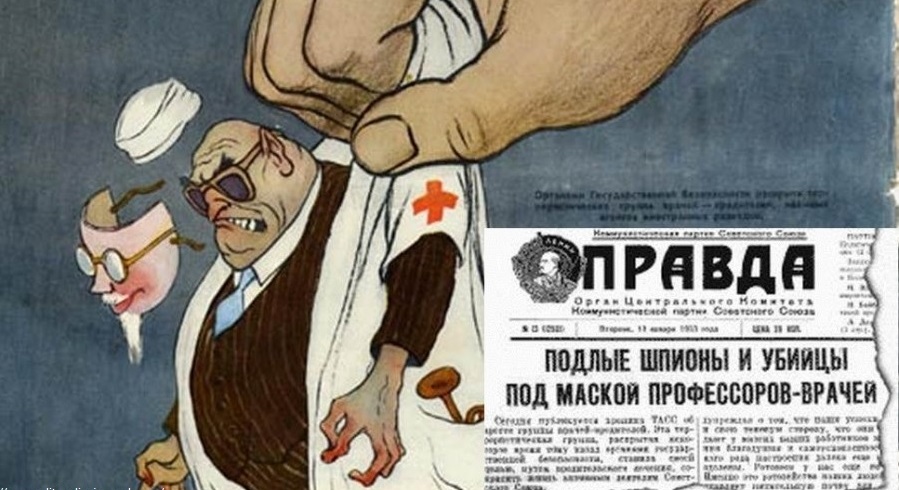
After the end of the Second World War, Jewish cultural life in Moldova was not revived. Many Jews of Moldova suffered during the antisemitic campaign in the Soviet Union, whose culminations were the "struggle against rootless cosmopolitanism" (1947–1953) and the "Doctors' Plot" (1948–1953).
Read more
In the late 1950s, persecution of religious Jews in Moldova intensified. In 1959, the last local synagogue in Bălți was closed, and in 1960 the one in Fălești. In Chișinău, only one synagogue remained open — the former glaziers' synagogue. In some cities, Jewish cemeteries were closed entirely or part of their territory was given over to urban development.
Jews of Moldova were distinguished by a high percentage of people with higher education. According to data for the 1961/62 academic year, there were 1,225 Jewish students in Moldova (6.4% of the total student body). In 1966, out of 500 researchers at the Moldavian Academy of Sciences, 49 were Jewish (around 10%). However, later in the Moldavian SSR, strict quotas for Jews obtaining higher education were in practice openly applied.
One of the most important spheres of Jewish cultural activity remained the underground study of Hebrew. Classes, lacking the most basic teaching materials, were held in private apartments. Jews of Moldova fought for the right of repatriation to Israel.
The first antisemitic trial in Chișinău was the case of Ya. Suslenski and I. Meshener in 1970. At the next Chișinău trial (21–26 June 1971), D. Maayan (Chernoglaz), A. Goldfeld and A. Halperin received various prison sentences. In Moldova, the trial of Sender Levinzon and his sister Clara took place in 1975.
Moldova was the only republic in the European part of the Soviet Union where the Jewish population grew from 1959 (from 95,107 to 98,072 people by 1970). However, by the 1979 census there were already 80,000 Jews in Moldova, and by the last Soviet census of 1989 — 65,672. The primary cause of the decline was mass emigration, which intensified further after the collapse of the Soviet Union in 1991.
Jewish Population in Soviet Moldova
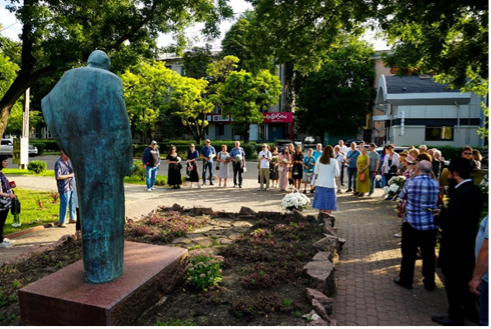
In 1989, the Republican Society of Jewish Culture (RSJC) was founded — the beginning of the recreation of the Jewish community. Jewish organizations are being established in Chișinău, Orhei, Soroca, Bălți, Bender, Cahul, Edineț, Râbnița, Tiraspol, Grigoriopol and Dubăsari.
Read more
Since 2008, it has operated as the Public Association "Jewish Community of the Republic of Moldova" (JCRM).
Today, the Jewish community of the Republic of Moldova numbers, by various estimates, between 5,000 and 15,000 people. This figure includes not only those who consider Jewish identity their primary or secondary identity, but also those who know and remember their Jewish roots.
Preserving Memory. Building the Future.
The Jewish Community of Moldova preserves the memory of the past while building a vibrant and meaningful future for the next generation.
Memorial Monuments
In recent decades, dozens of memorials and monuments have been created at sites of mass executions and burials across Moldova.
Stumbling Stones
"Stumbling stones" are installed at the last addresses of Jews who perished in the Holocaust, inscribing their memory into the everyday landscape of Moldovan cities.
Educational Programs
Considerable efforts are made to educate the non-Jewish population of Moldova about these tragic pages in the history of the country's Jews.
Holocaust Remembrance Day
Annual commemorations, Yom HaShoah observances and documentation projects keep the memory alive and accessible to all.
